Artwork records
Object details, client references, dimensions, photos, art documentation, and movement history.

Internal operating platform
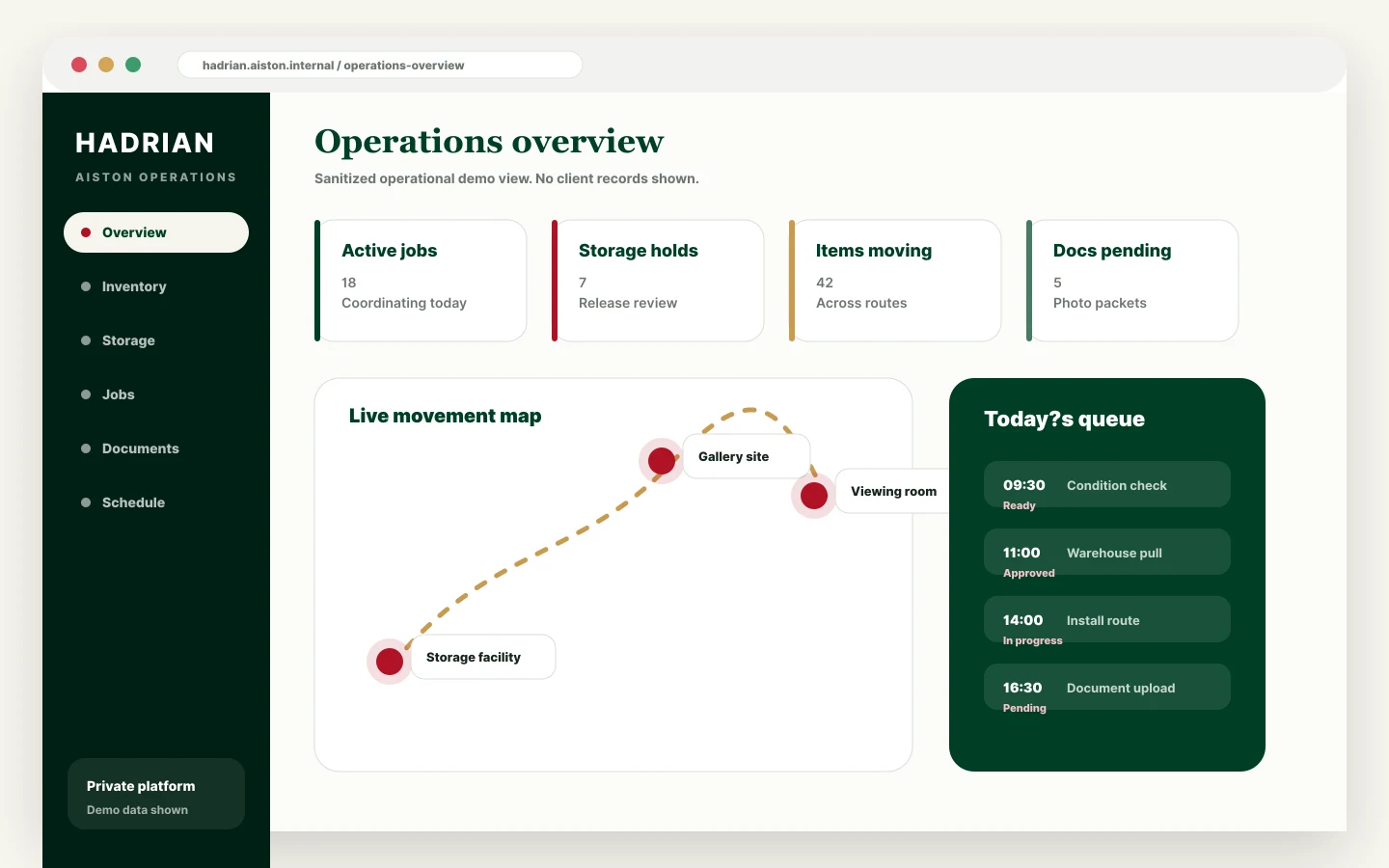
Hadrian is the internal operating platform Aiston built to manage artwork movement, storage, documentation, and service details with greater accuracy and accountability.
What Hadrian is
Object details, client references, dimensions, photos, art documentation, and movement history.
Schedules, addresses, service requirements, crew workflows, site notes, and operational context.
Climate controlled art storage records, warehouse organization, controlled releases, and viewing preparation.
Hadrian connects the details behind each job so artwork does not move through disconnected emails, spreadsheets, paper forms, and memory alone.
Why we built Hadrian
For years, Aiston relied on industry tools and manual processes. Those systems served a purpose, but they were never designed specifically around how our teams move, install, document, store, and manage artwork every day.
Rather than forcing operations to fit off-the-shelf tools, we built around the work our teams actually do. Hadrian gives Aiston a clearer operational record across every stage of the artwork lifecycle.
Study real field workflows, warehouse intake, releases, installations, and client communication.
Translate recurring operational needs into practical tools for handlers and coordinators.
Connect transportation, storage, inventory, documentation, and project records in one system.
Continue development from day-to-day use inside New York fine art services operations.
The artwork lifecycle
Hadrian connects fine art logistics from intake through delivery, tying together artwork records, movement history, documentation, releases, storage locations, and next-step coordination.
What Hadrian helps us do
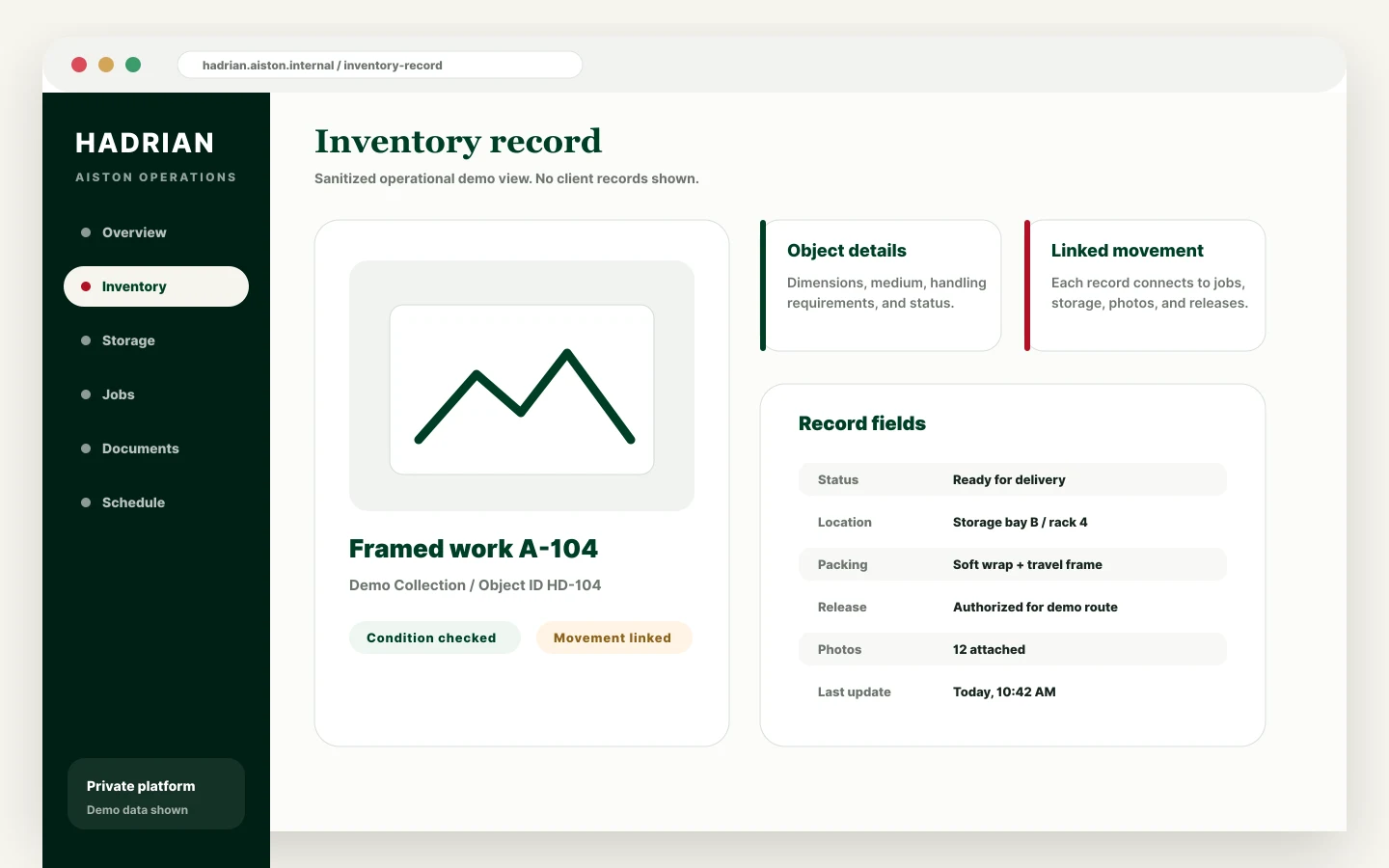
Artwork records connect object details, photos, dimensions, condition status, locations, and movement history.
An inventory record showing how artwork details stay tied to storage, documentation, and movement history.
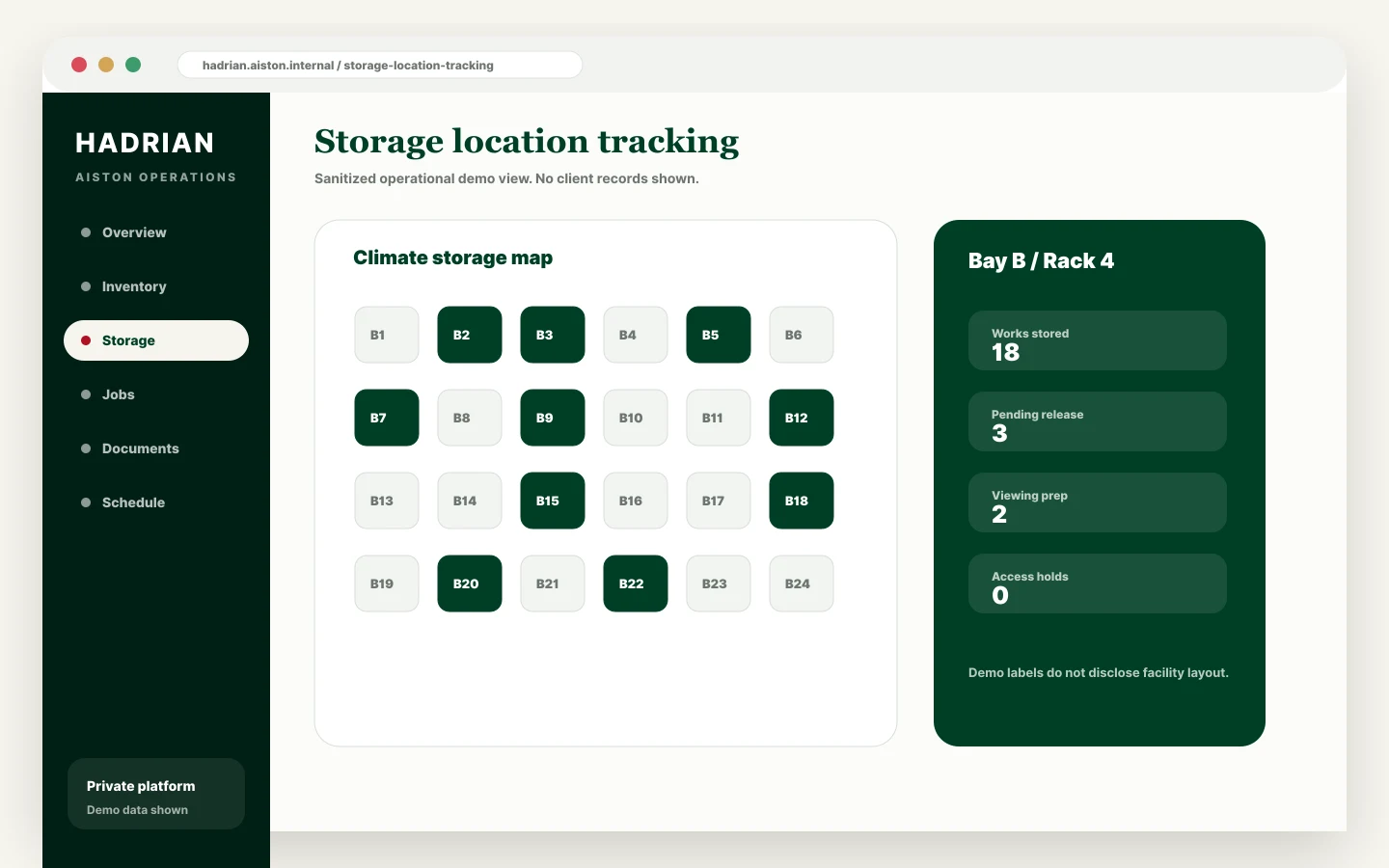
Storage views help Aiston organize location records, release holds, viewing prep, and warehouse handoffs.
A storage map using generic bay labels to show release status, viewing prep, and location context.
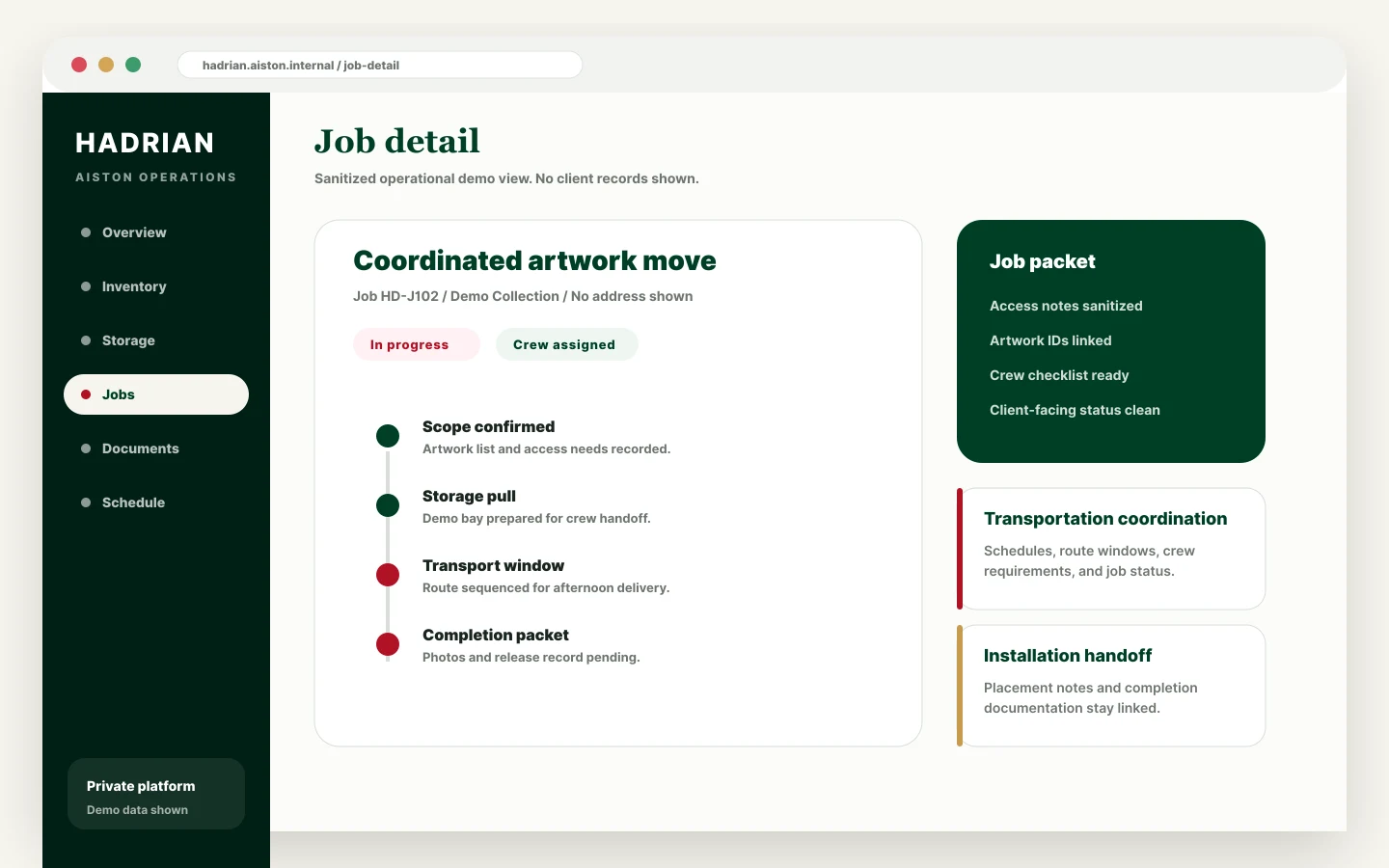
Job records bring together route windows, crew readiness, service requirements, and field status.
A job detail view showing transport milestones, crew readiness, and completion documentation.
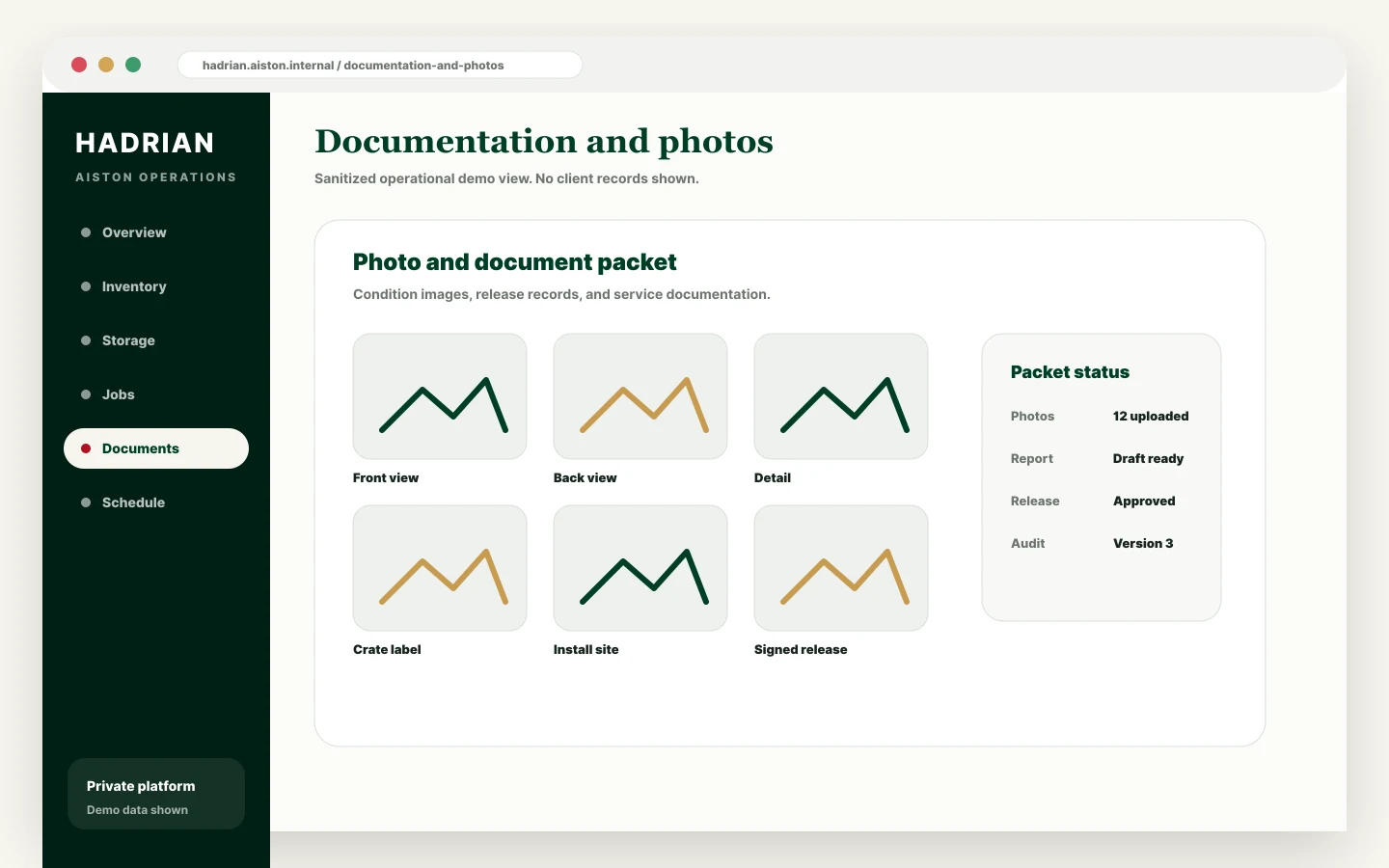
Photos, condition notes, release records, and supporting documents stay attached to the work they support.
A documentation packet showing photo groups, report status, release status, and versioning.
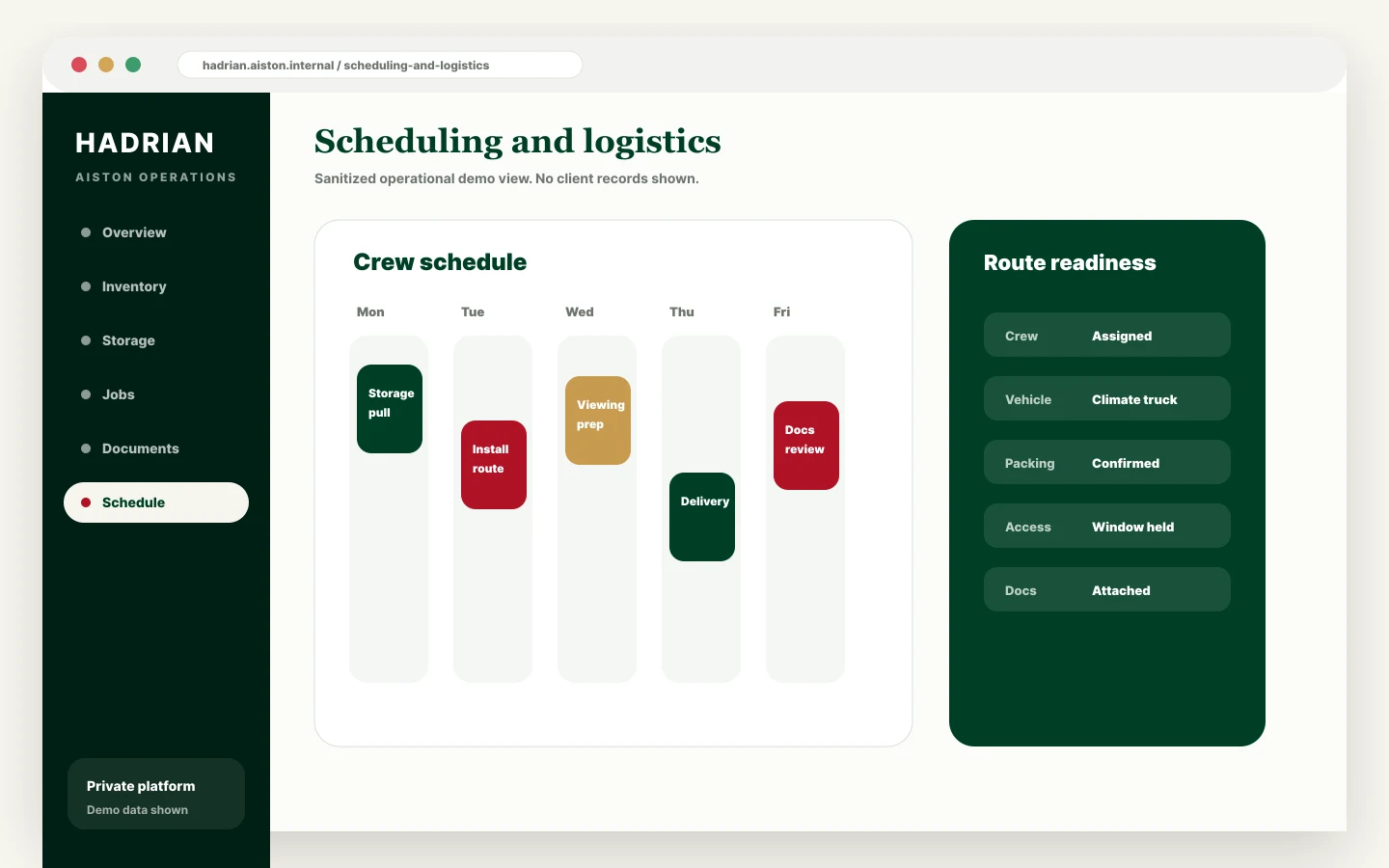
Project records support placement planning, item lists, site requirements, crew coordination, and completion documentation.
A scheduling view showing how route readiness and project timing remain visible to operations.
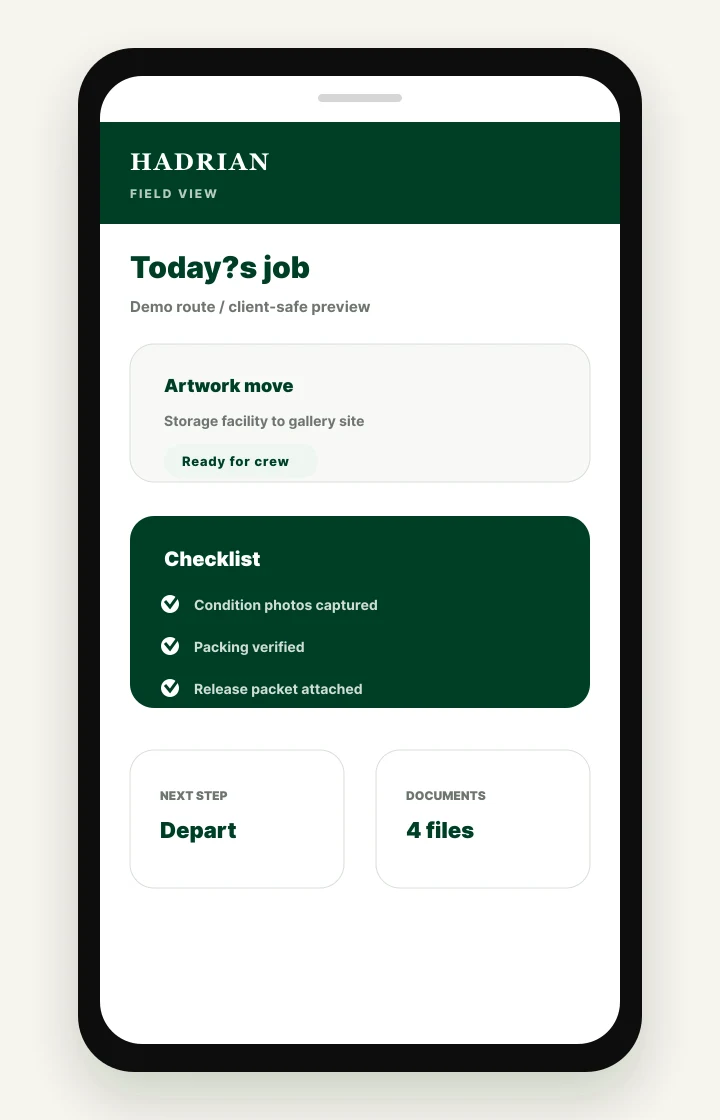
Clearer handoffs, better internal context, fewer information gaps, and more consistent follow through.
A mobile field view designed around checklists, next steps, and document access for active work.

Hadrian was shaped by the daily requirements of artwork records, fine art transportation, storage releases, viewing appointments, condition documentation, and client communication.
Platform views
These example views use demonstration data, but they are based on the way Hadrian organizes real Aiston workflows. They show the kind of connected record our team works from without exposing private collection data.
Core platform capabilities
Artwork details, locations, photos, metadata, and collection organization.
Location records, bay organization, access notes, and release coordination.
Scheduling, routing, dispatching, and crew assignment.
Photos, condition reports, supporting notes, and movement history.
Installations, exhibitions, art fairs, collection moves, and releases.
Shared context for communication, approvals, status questions, and service history.
Built for the industry we serve
Clearer art collection management, storage visibility, and movement records.
Coordinated releases, fair logistics, installation plans, and inventory movement.
Structured records and carefully documented handoffs for institutional standards.
Better coordination between delivery, placement, installation, and client approvals.
Organized project movement from studio collection to exhibition or delivery.
Inventory clarity and documentation during complex collection transitions.
Centralized records for multi-site artwork tracking and service planning.
How this differentiates Aiston
Many logistics workflows depend on a patchwork of tools. Hadrian lets Aiston shape technology around our own service model for fine art transportation, climate controlled storage, art handling, installation, inventory, and documentation.
The result is a more structured operating model than work managed only through generic moving software, disconnected storage tools, spreadsheets, or manual paperwork.
Human expertise first
The value is the combination: trained specialists, careful field judgment, and purpose built systems that keep information accurate before, during, and after the work.
Hadrian continues to evolve from day-to-day use by Aiston teams and the documentation standards our clients expect.
Client access workflows
Approval records
Collection reporting
Scheduling tools
Documentation templates
Service history views
Every artwork movement depends on planning, records, communication, and accountability. Hadrian helps Aiston manage those details from the first request through final placement.